Why Probiotics Stop Working After 45 — And the Gut Secret Traditional Korean Medicine Has Known for Centuries
A board-certified integrative medicine physician explains the gut–hormone connection your doctor probably hasn’t mentioned — and why the supplement you trust most may be the one that can’t work.
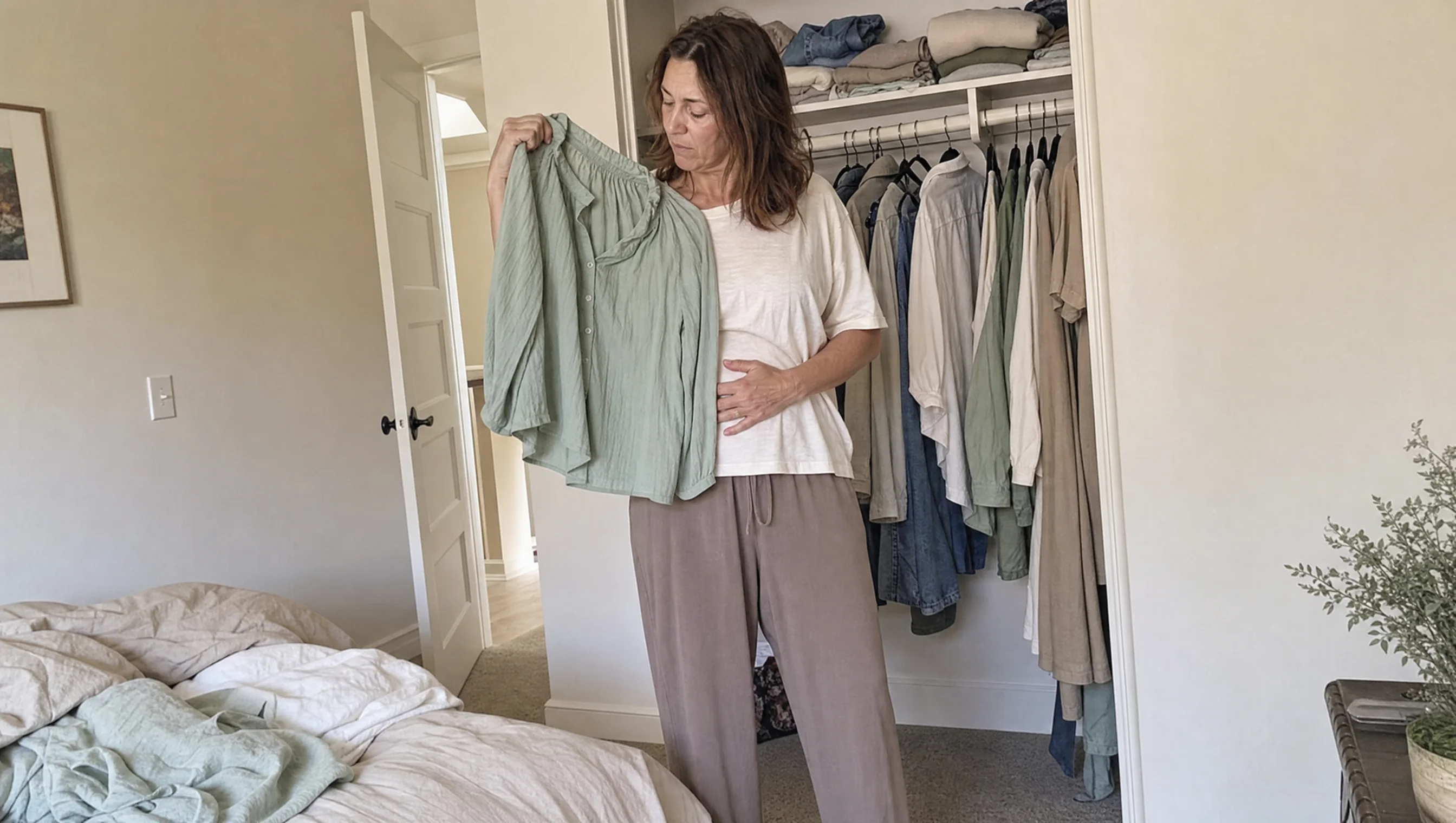

I’m Not a Wellness Influencer.
I don’t have a podcast. I don’t sell supplements on Instagram. I don’t do “gut health hauls” on TikTok.
I’m an integrative medicine physician in private practice. I see roughly 30 women a week, most between 44 and 58. I went to medical school. I did my residency. I got board-certified. And then I spent the next decade and a half learning that my training had gaps I couldn’t see until I fell into them myself.
Here’s why I’m writing this.
Over the past three years I’ve noticed a pattern in my practice I can no longer ignore. Smart, disciplined women walk into my office — women who exercise, eat thoughtfully, manage stress — and every one of them says some version of the same thing:
“I’m doing everything right and the bloating still won’t stop.”
They’ve tried dietary changes. Cut dairy. Added fermented foods. Elimination diets. Every single one has at least one (usually two or three) bottles of probiotics in her medicine cabinet.
None of them are working.
And one of them said something to me last spring that I haven’t been able to forget:
If that sentence describes your mornings, keep reading.
Then I Turned 47. And It Happened to Me.
I’d been telling patients for years that probiotics support gut health. I recommended specific strains. I had brands I trusted. The science isn’t wrong — probiotics can work.
They just stopped working for me.
At 47, perimenopause arrived without asking permission. The bloating came first — a persistent, low-grade fullness that didn’t respond to anything I’d been recommending. Then the midsection weight shift. Then the foggy mornings where I couldn’t remember the name of a medication I’d prescribed a thousand times.
I went to my colleagues. Women I’d trained with. Women I respected.
They told me to take HRT and deal with it.
That was the moment I realized my training wasn’t wrong. It was incomplete. And if it was incomplete for me — an MD with 15 years of experience — it was incomplete for every woman in my waiting room wondering why everything she was doing had stopped working.
What Your Doctor Probably Hasn’t Told You About Perimenopause and Your Gut
Most conventional medicine treats perimenopause as a hormone problem with digestive symptoms as a side effect.
That framing is incomplete. Here’s what’s actually happening.
Your gut contains something called the estrobolome — a specific collection of bacteria responsible for metabolizing and recirculating estrogen. When estrogen levels are stable, the estrobolome functions normally. Digestion is regular. Gut motility stays consistent. Your body processes food the way it always has.
When estrogen begins to decline in perimenopause, the estrobolome destabilizes. Four things happen at once:
You’re not doing anything wrong. Your body isn’t broken.
The Pattern I Can’t Unsee
Women between 44 and 58. All of them experiencing some combination of:
- Bloating that won’t resolve no matter what they eat or eliminate
- “Meno belly” weight gain concentrated around the midsection that appeared out of nowhere
- Constipation one week, loose stools the next — a gut that can’t decide what it’s doing
- Brain fog so thick they forget words mid-sentence
- Fatigue that sleep doesn’t fix
Every one of them is doing the work. They’re not lazy. They’re not ignoring their health. They’re trying harder than they’ve ever tried in their lives — and it’s not enough.
And the one thing they all have in common?
The Probiotic Paradox: Why the Supplement You Trust Is the One That Can’t Work After 45
This is the part that took me 15 years — and my own perimenopause — to finally accept.
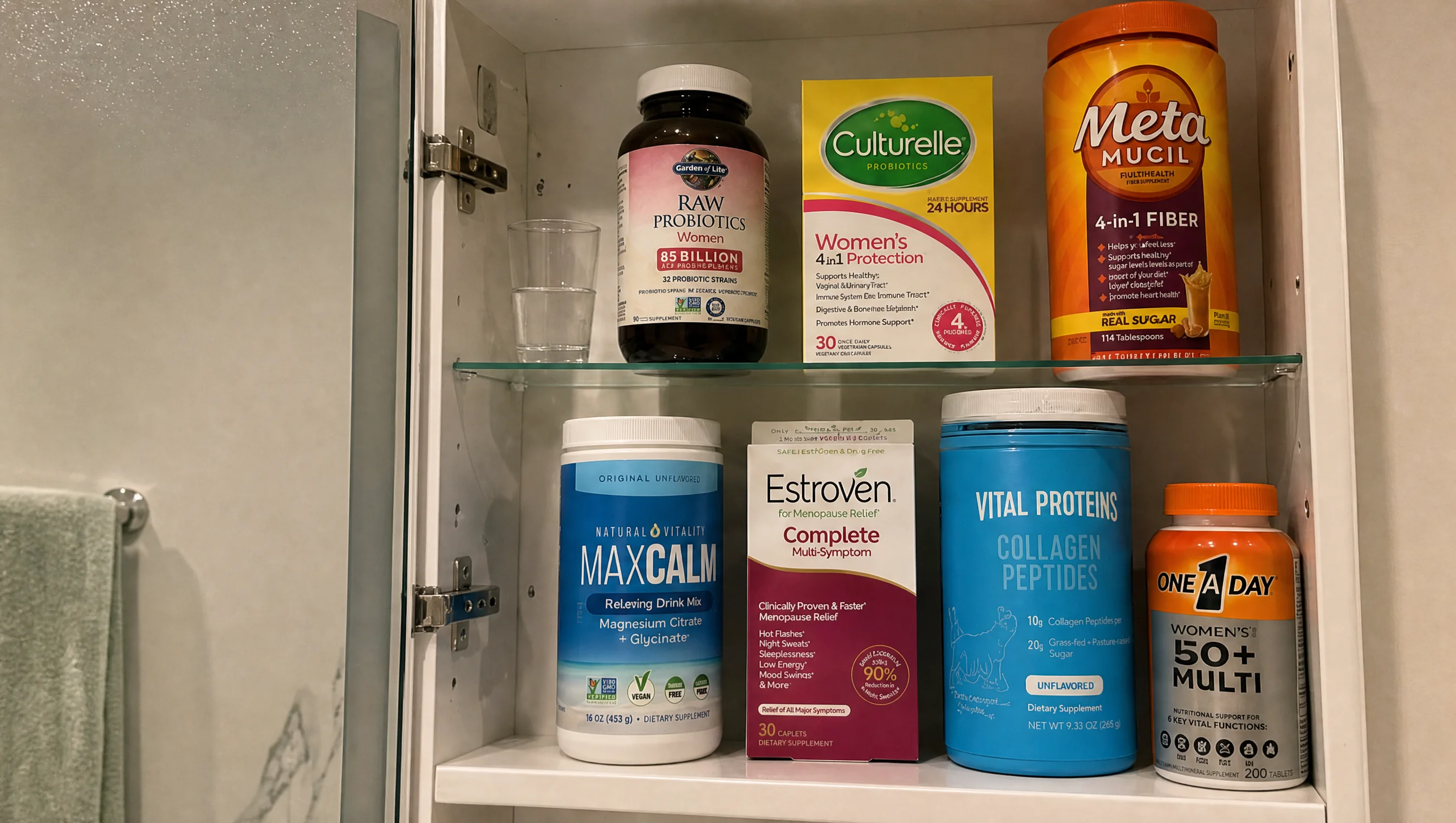
You now know what’s happening underneath: declining estrogen, a destabilized estrobolome, thinning bacterial populations, a weakening gut barrier. Into this shifting environment, you introduce a probiotic — a capsule full of foreign bacterial strains grown in a lab, not in your body.
The seeds aren’t bad. The timing is.
Many probiotic strains are killed by stomach acid before they reach the intestines. The ones that do survive arrive in a terrain that’s actively changing underneath them — and they can’t colonize ground that won’t hold still. They camp out temporarily, a few days, maybe a week, then they’re gone. You feel a brief improvement (maybe), then it fades. So you take another capsule tomorrow. And the next day. And the next month.
Probiotics aren’t the wrong idea. They’re the wrong idea right now — for your gut, at this stage of your life.
Then Why Does Every Brand Keep Selling You Probiotics?
Because you buy them every month.
I don’t say that to be cruel. I say it because once you see the business model, you can’t unsee it.
Probiotic companies sell you bacteria that don’t stay. That’s not a bug — it’s the business model. If the bacteria colonized permanently, you’d buy one bottle and stop. There’d be no subscription. No auto-ship. No $40/month “wellness routine” for the rest of your life.
Think about the brands you’ve tried. The one your doctor mentioned at your annual physical without really looking up from the chart. The one with the celebrity on the packaging. The one that costs $60 a month and comes in a sleek black bottle. How many months have you been on them? How much have you spent?
They’re not selling you gut health. They’re selling you a subscription to bacteria that leave the moment you stop paying.
| Period | Your Cost | What Actually Happened |
|---|---|---|
| Month 1 | $40 | Bacteria arrive. Most die in stomach acid. |
| Month 6 | $240 | Bloating unchanged. “Maybe I need a different strain.” |
| Year 1 | $480 | Switched brands twice. Still bloated. |
| Year 3 | $1,440 | “I’ve tried everything.” |
| 5 years of perimenopause | $2,400+ | Still searching. |
The moment you stop taking them? Everything resets. Because the foreign bacteria were never yours to begin with.
So Is Everything Useless?
No.
But the answer isn’t more bacteria. It isn’t a different strain, a higher CFU count, or a fancier subscription box.
Feed, Don’t Seed.
Three words. One rule. And once you understand it, everything about the probiotic industry looks different.
They introduce foreign bacterial strains into your gut — strains that weren’t there before, didn’t evolve with your body, and can’t survive without continuous resupply.
They deliver targeted nutrition to the bacteria already living in your gut — the strains adapted to your body, your diet, your hormonal environment.
During perimenopause, when your gut ecosystem is shifting under hormonal pressure, the last thing it needs is strangers. It needs support for what’s already there.
It’s just underfed.
Specifically, two prebiotic compounds do what probiotics can’t:
● Polydextrose
A soluble prebiotic fiber that selectively feeds beneficial gut bacteria, particularly the Bifidobacteria strains that decline during perimenopause. It doesn’t add bulk like Metamucil. It adds nutrition for the specific bacterial populations your gut is losing.
● FOS (fructo-oligosaccharide)
A short-chain prebiotic that strengthens gut barrier function. Remember the tight junctions that loosen when estrogen drops? FOS supports the bacteria that help maintain them.
Together, they don’t introduce anything foreign. They feed what’s already yours. They work with the hormonal transition, not against it.
My Halmeoni Knew This Before I Went to Medical School
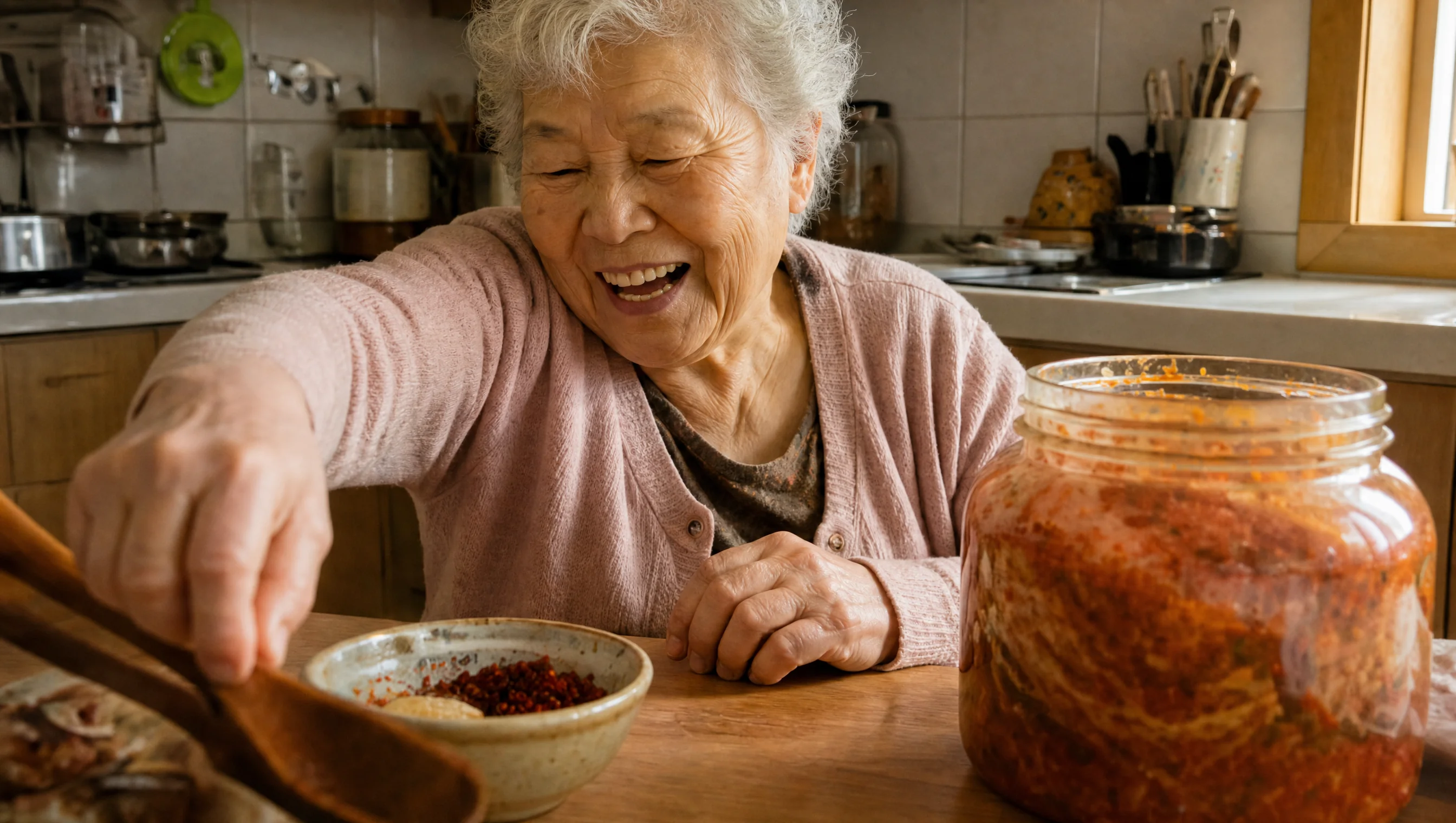
I grew up in a Korean-American household. My grandmother — my halmeoni — kept a kitchen that smelled like doenjang and gochugaru. There was always kimchi fermenting on the counter. Fermented soybean paste in the pantry. A rhythm to how she prepared food that I didn’t understand as a child and didn’t appreciate as a medical student.
Korean fermented foods are the original prebiotics. They feed the gut’s existing ecology. They don’t colonize it with foreign strains.
My halmeoni didn’t know the word “prebiotic.” She just knew that fermented foods kept the gut right. She knew the answer wasn’t adding something new — it was feeding what was already there.
When I went to medical school, I forgot everything she taught me. I learned about strains and CFU counts and randomized controlled trials. I became a Western doctor.
Perimenopause made me remember.
The modern prebiotic science I now use with my patients isn’t new. It’s the scientific validation of a philosophy Korean grandmothers have practiced for centuries.
The Brand Is Yumi.
You’ve probably never heard of them — and that’s actually the point.

Yumi is a Korean-formulated prebiotic jelly stick. Not a capsule. Not a powder. A 25g jelly — a format that’s been standard in East Asian supplement culture for decades, even if it’s unfamiliar here.
It contains a targeted prebiotic stack — Polydextrose and FOS — designed around the Feed, Don’t Seed philosophy. No probiotics. No laxatives. No stimulants. No foreign bacteria.
Unlike probiotics, the benefit doesn’t disappear when you stop. You’re not renting bacterial tenants. You’re feeding the ones that already live there. When they’re strong and well-nourished, they stay — because they were always yours.
Yumi doesn’t have $50 million in marketing budget. They don’t have a celebrity spokesperson. They don’t sponsor wellness podcasts. The brands you’ve heard of aren’t the best product. They’re the best subscription.
How It Works

Probiotics seed. Prebiotics feed.
The difference is mechanical, not philosophical:
- Foreign bacteria swallowed in capsule
- Many killed by stomach acid before reaching the intestines
- Survivors arrive in shifting gut terrain
- Can’t colonize — camp temporarily
- Leave when you stop buying
- Repeat monthly
- Targeted prebiotic fiber in jelly format
- Reaches gut directly — no capsule, no stomach-acid gauntlet
- Feeds your existing Bifidobacteria
- Beneficial populations increase
- Gut barrier strengthens
- Bacteria don’t leave — they were always yours
I Tried It Myself Before I Recommended It to a Single Patient

I’m not in the business of recommending things I haven’t tested. I’ve been burned too many times by supplements that looked good in studies and failed in practice. So before I said a word to any patient, I tried Yumi myself.
I didn’t tell a single patient about it until I’d been using it for two full months. I wanted to be sure. I’ve been wrong before — about probiotics, about fiber supplements, about a lot of things. I wasn’t going to be wrong about this.
Then I started with Susan.
Susan is 49. Office manager. Two teenage kids. Partnered. She goes to the gym three times a week. She’d been coming to me for two years with the same complaint, almost word for word every visit:
“My body is changing without my permission. I do everything right and the bloating won’t stop.”
She was the woman who told me about the morning getting-dressed test. Every outfit a referendum on her stomach. Every mirror a small humiliation.
She’d tried three different probiotic brands over five years. Metamucil — I recommended it, I was wrong. A fiber gummy from the grocery store. One round of a GLP-1 medication she quit because of the constipation side effects.
I recognized her pattern because it was my pattern.
I told her about Feed, Don’t Seed. I explained the prebiotic difference. I gave her Yumi and asked her to try it for 30 days before telling me anything — I didn’t want her hope to cloud the data.
She came back in four weeks. She didn’t lead with “it’s working.” She led with this:
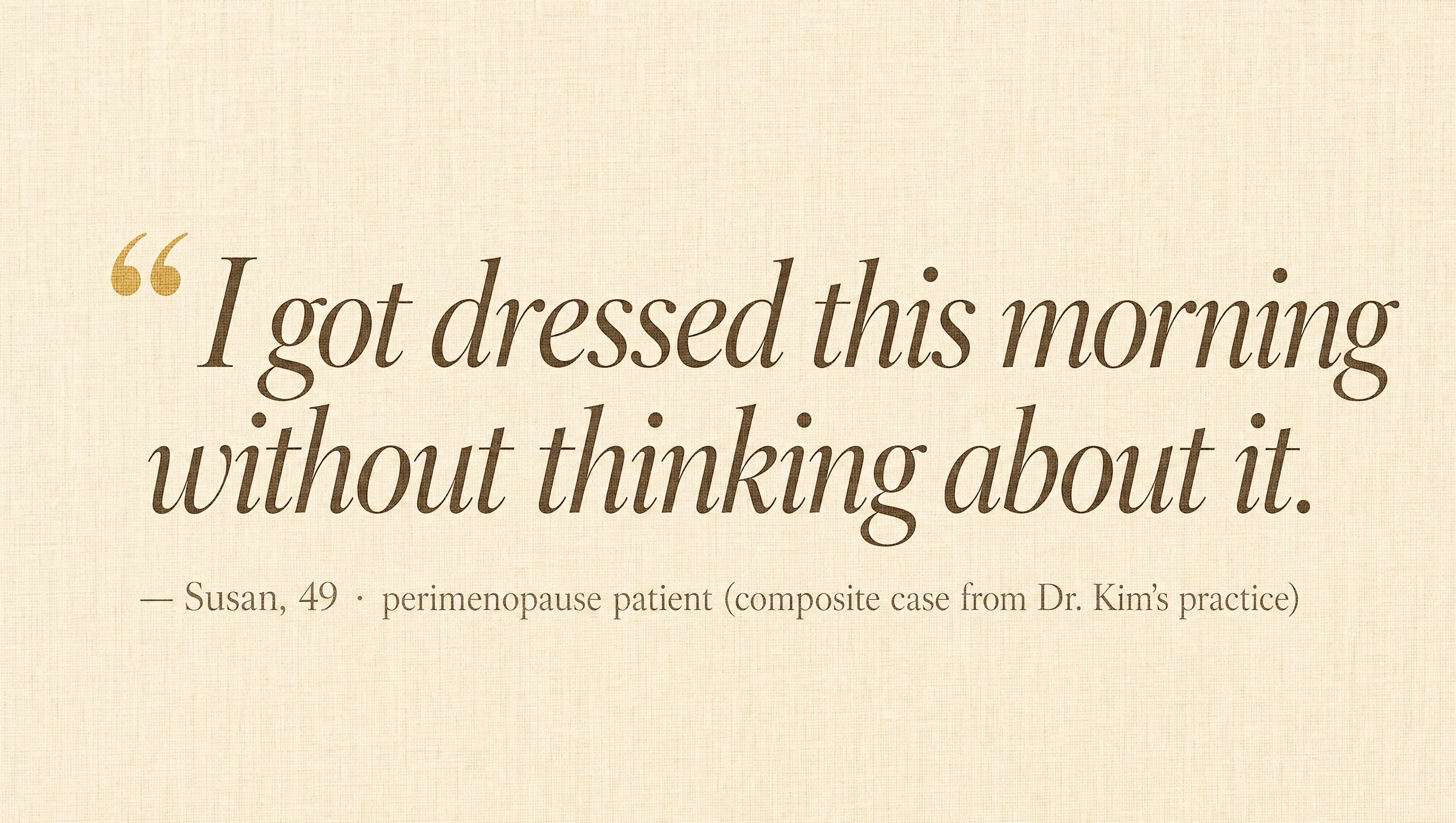
Results may vary. Individual experiences are not guaranteed outcomes.
That was enough.
The Questions My Patients Ask Most
Can I take this alongside HRT?
Yes. Prebiotics don’t interact with hormone replacement therapy. They feed gut bacteria — they don’t alter your hormones. If you’re on HRT, Yumi works with it, not against it. Always mention any new supplement to your prescribing physician.
I’m on thyroid medication. Is this safe?
Prebiotics are fiber. They don’t interact with levothyroxine or standard thyroid medications in any clinically meaningful way. But tell your doctor — it’s a 10-second conversation at your next appointment.
Do I have to take it forever?
No — and this is the fundamental difference. Probiotics require continuous resupply because the foreign bacteria leave. Prebiotics strengthen your existing gut ecology. When you stop, your bacteria don’t disappear — they were always yours. Many of my patients take Yumi daily during the hardest years of perimenopause and then taper naturally as their gut stabilizes.
How is this different from just eating more fiber?
Dose and specificity. Polydextrose and FOS are targeted prebiotics that selectively feed Bifidobacteria — the specific populations that decline during perimenopause. Metamucil is psyllium husk — bulk fiber that adds volume to stool. It’s not the same mechanism. One feeds specific bacteria. The other fills space.
Why a jelly stick? Why not a capsule?
The jelly format dissolves and reaches the gut directly. Capsules have to survive stomach acid and dissolve at precisely the right point in your digestive tract — and during perimenopause, when gut motility is already disrupted, that timing becomes unreliable. The jelly bypasses that problem entirely. It’s not a gimmick. It’s a delivery advantage that’s been standard in East Asian supplement formats for decades.
If this works, why haven’t I heard of it?
Because Yumi doesn’t need you to buy it every month to stay in business. The big probiotic brands spend millions on marketing because their model requires monthly subscriptions to survive. A product that actually feeds your existing gut bacteria doesn’t need a subscription to work — so there’s no $50M marketing budget behind it. The brands you know aren’t the best product. They’re the best marketers.
What if it doesn’t work for me?
30-day money-back guarantee. If your gut doesn’t improve in 30 days of consistent use, return what’s left of the box and you get every dollar back — no questions, no return-the-empty-stick nonsense. I tell my patients to give it the full 30 days. Gut changes during perimenopause take time, and a week or two isn’t enough to tell.
A Note on Why I’m Writing This
I don’t have a wellness podcast. I don’t sell supplements. I see patients.
I’m writing this because I spent 15 years recommending things to women that didn’t fully address what perimenopause does to the gut. I’m writing this because my own colleagues told me to “just take HRT and deal with it” when I was struggling. And I’m writing this because the thing that finally worked for me was something my grandmother knew — and the science to explain why it works has been available for years.
If you’re a woman in your 40s or 50s who has tried everything and is still dealing with chronic bloating, constipation, and the digestive disruption that comes with hormonal change — this is worth trying.
The 30-day money-back guarantee means there’s no real risk in finding out.

It just needs you to stop replacing it — and start feeding it.
Comments are reader-submitted and reflect individual experiences. Outcomes vary. The Midlife Health Report may edit for clarity but does not alter substance.
Comments (11)